
PRIVATE ART/POTTERY COLLECTION + ESTATE AUCTION
Thursday, 3 - Monday, 7 September 2026
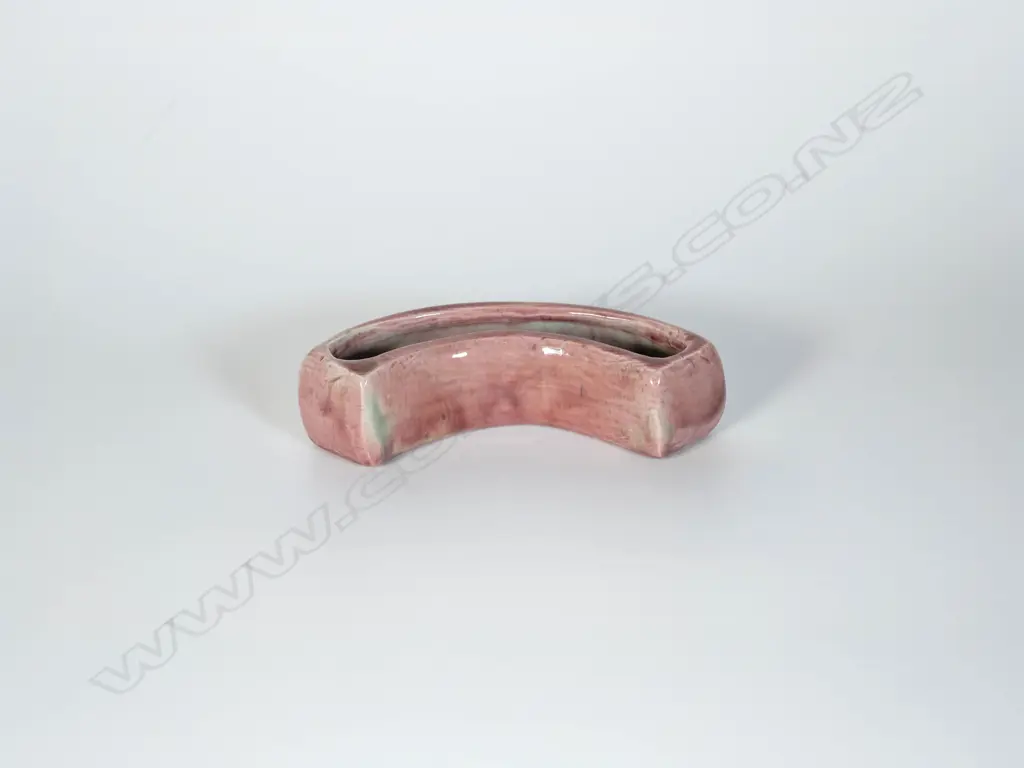
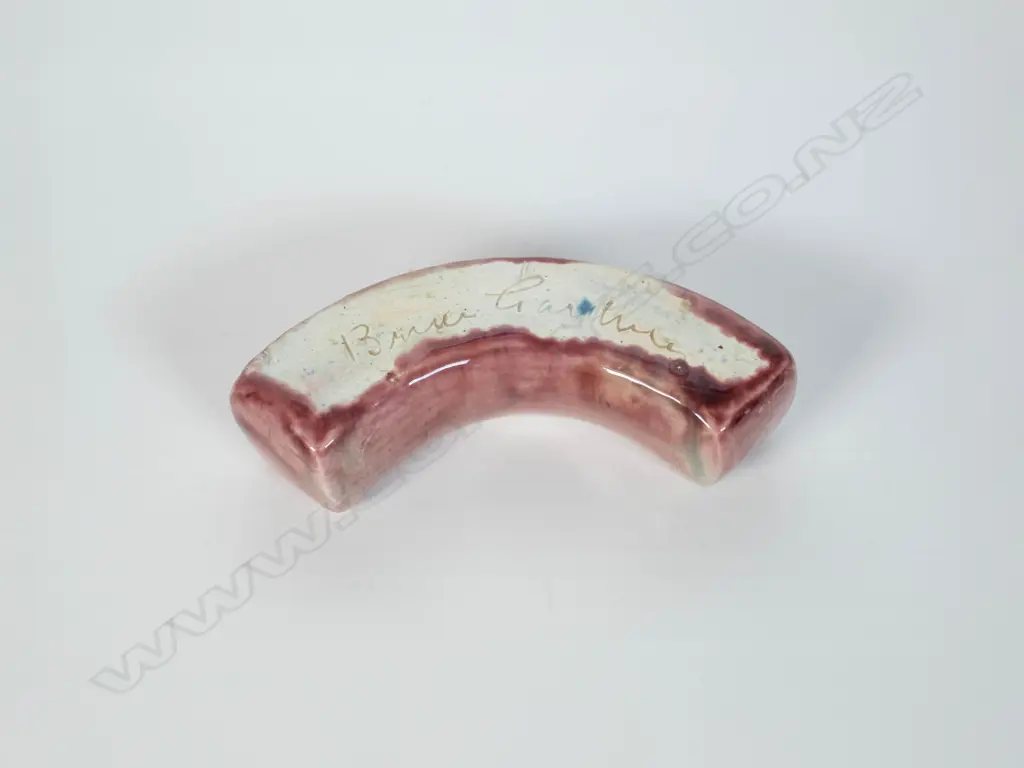
Briar Gardner (1879–1968) - Curved trough vase
Realised: $45 plus premium
Lot Details
in plum tones with green highlights, full signature incised to underside, 150 x 65 x 35mm Briar Gardner’s (1879–1968) family had generational roots in the brick and pipe industry, though she was in her mid 50’s before she discovered studio pottery, and “taught herself pottery by trial and error”. Descriptions of Briar Gardner’s output levied against those of her historical stature and influence seem antithetical. Perhaps this is because her ceramics beg not to be reduced to simple pots — but seen as enthusiastic exercises in discovery — art through experimentation. Accounts of Briar Gardner paint her as endlessly curious, joyously contrarian, unconventional and unabashed — a personality which is intrinsic through her work — “her hands were never idle and whatever she touched reflected something of her original nature”. Of a 1930’s educational film featuring Briar Gardner, John Parker notes, “the sheer exuberance with which she attacks the bisqueware with the glazes is infectious.” Briar Gardner produced enduring and exceptional pots, arguably becoming New Zealand’s first studio potter simply by “following her own inspiration”. Though ‘Anglo-Oriental influences [would become] dominant in studio ceramics it is undeniable that ceramic history in Aotearoa followed Gardner’s inspiration, too. Almost a century ago, on first discovering a catalogue of glazes, Gardner enthused over “every colour and many shades and tints of each to make any lover of colour aflame with desire to use them all”. Gardner’s resulting pots have much the same effect — to make any lover of colour aflame with desire. Confronted by her family over her “inability to grasp the economic significance of the ‘reproducible experiment’ … her answer was always the same… ‘That would not be art’”.
Other items you may like from this sale
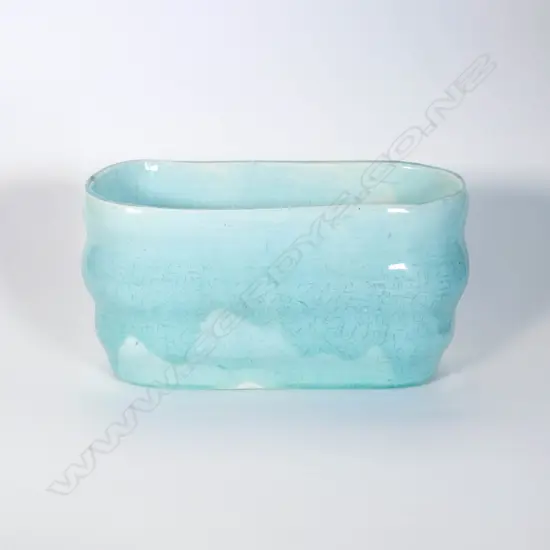
Briar Gardner (1879–1968) - Large trough vase
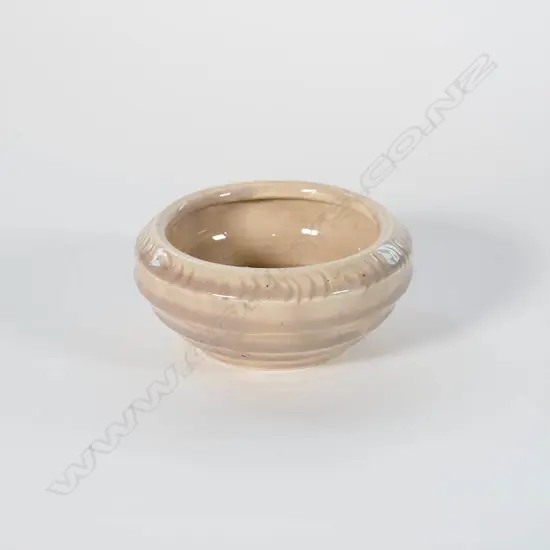
Briar Gardner (1879–1968) - Bowl with koru decoration
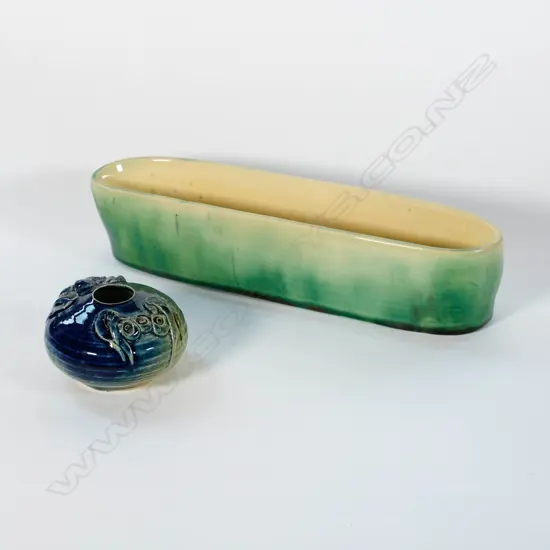
Two vases in the style of Briar Gardner. Largest 260 x 60 x 65mm
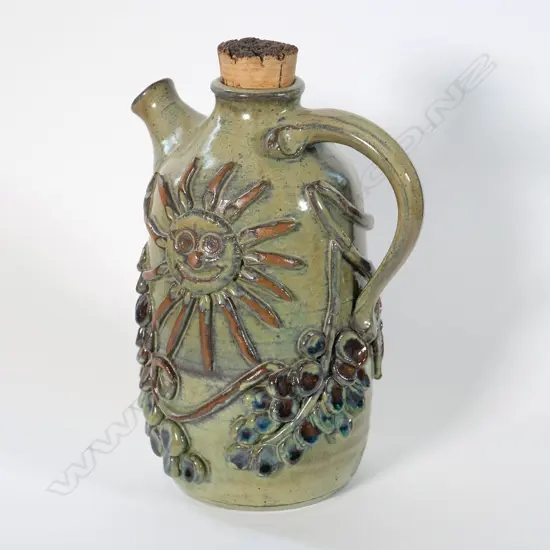
Betty Beadle née Cutcher (1924 - 2002) coffee pot w applied grape & sun motifs
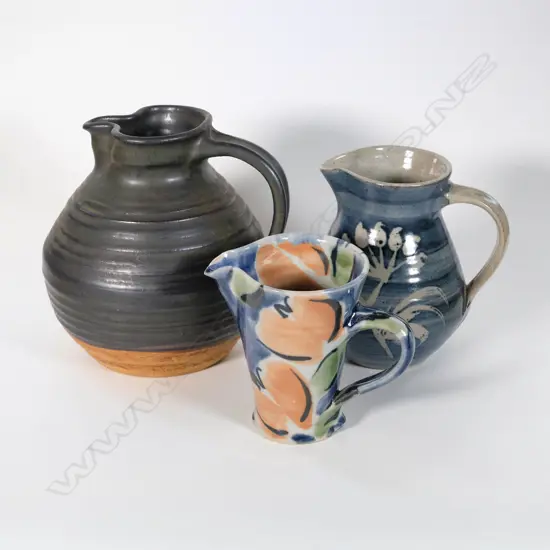
Three Pottery Jugs - Raewyn Atkinson & Stephen Carter
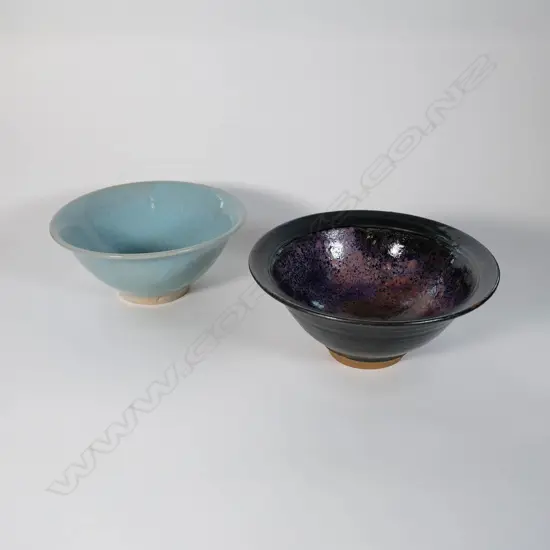
Peter Stichbury (1924-2015) - Two bowls
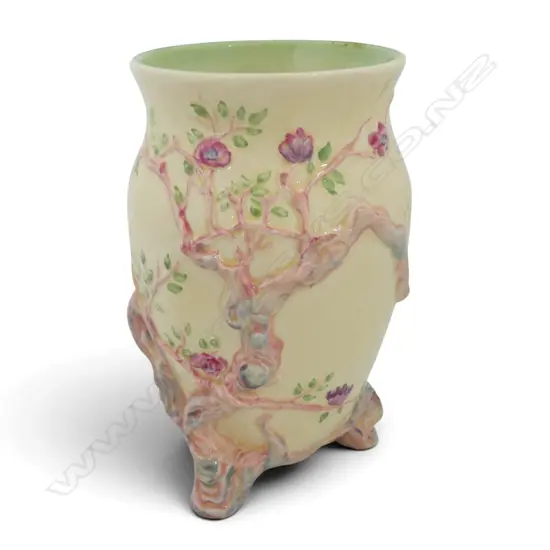
CLARICE CLIFF 'MY GARDEN' VASE' H.195mm
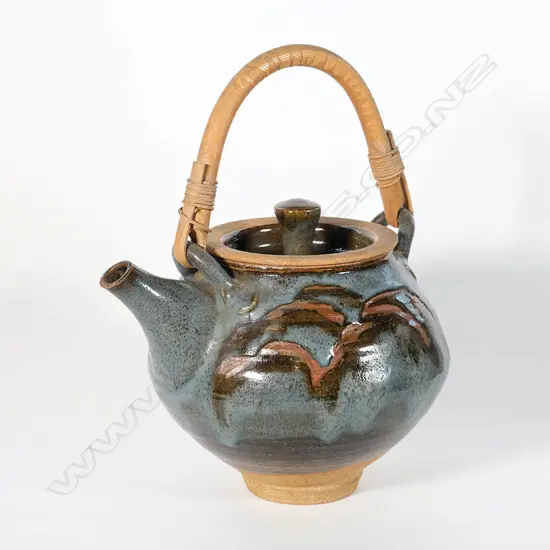
Peter Stichbury (1924-2015) - Teapot w/ cane handle
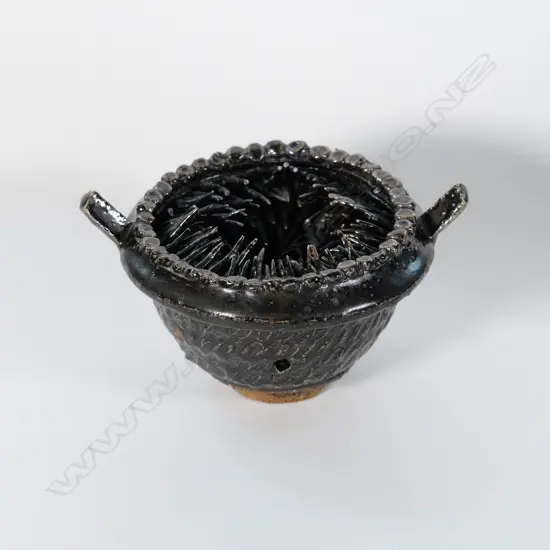
Laurie Steer (b.1977) - Dream Pool - Stoneware. 2019
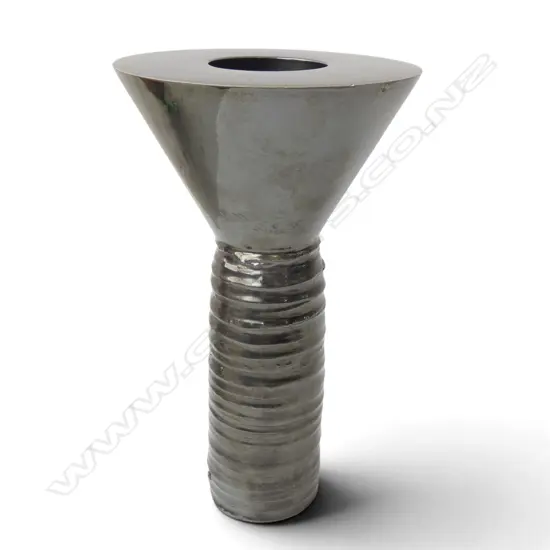
GRAHAM AMBROSE ceramic vase w metallic lustre glaze, H.225mm, 2 tiny frits to rim
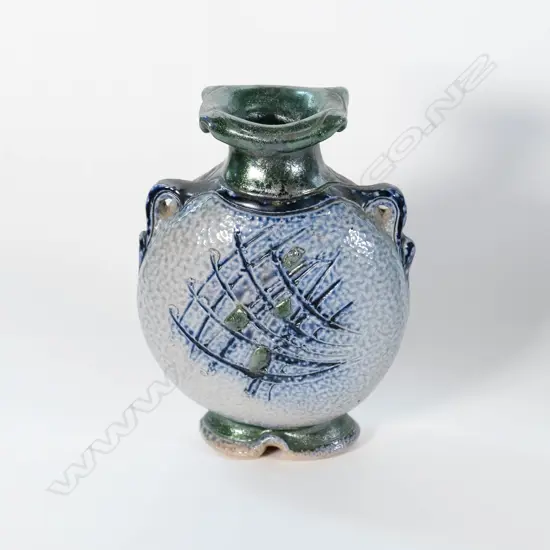
Pamella Annsouth - Salt glaze vase with incised decoration
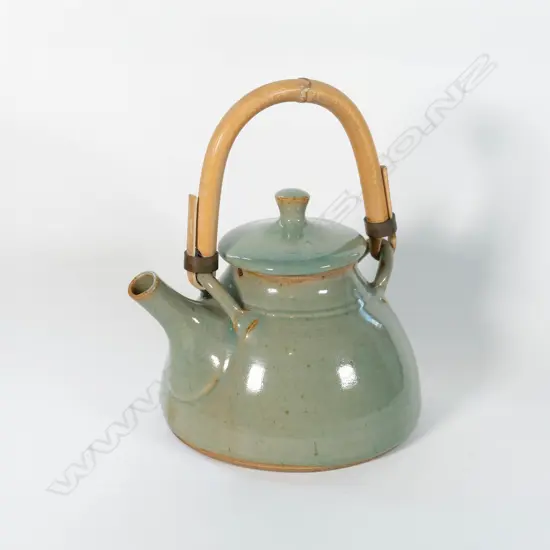
Peter Stichbury (1924-2015) - Celadon teapot w/ cane handle
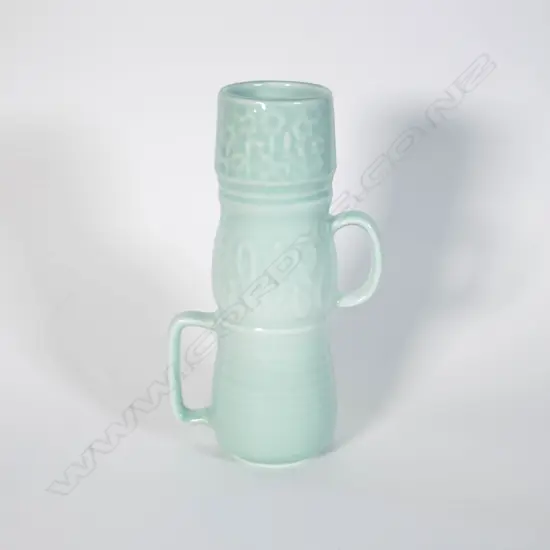
Susannah Bridges - Mint glaze 'Cup Vase' after Crown Lynn,
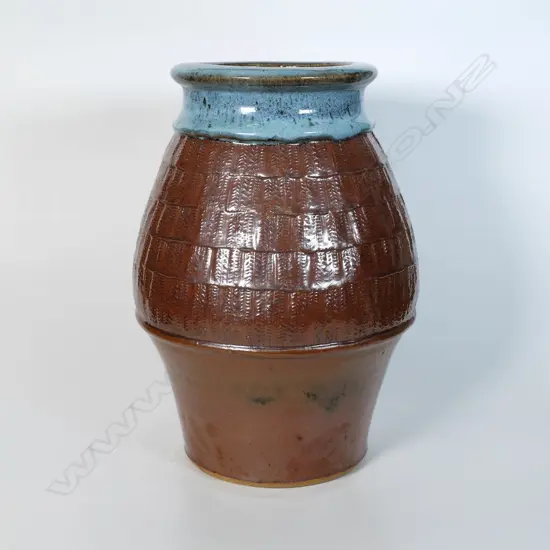
Peter Stichbury (1924-2015) - Stoneware baluster vase,
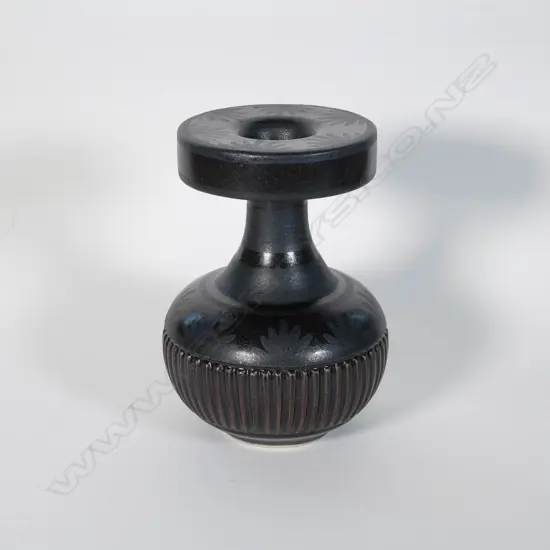
Anneke Borren (b. 1946) - Black on black vase
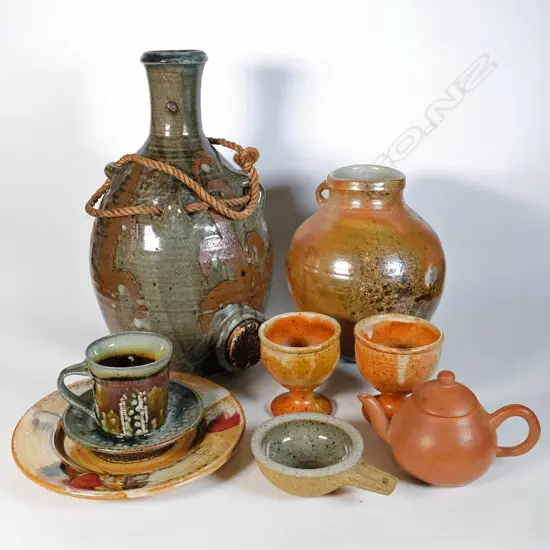
Asst. Pottery incl. Barry Ball handled bowl (sml) & Long Dan Yixing Style teapot
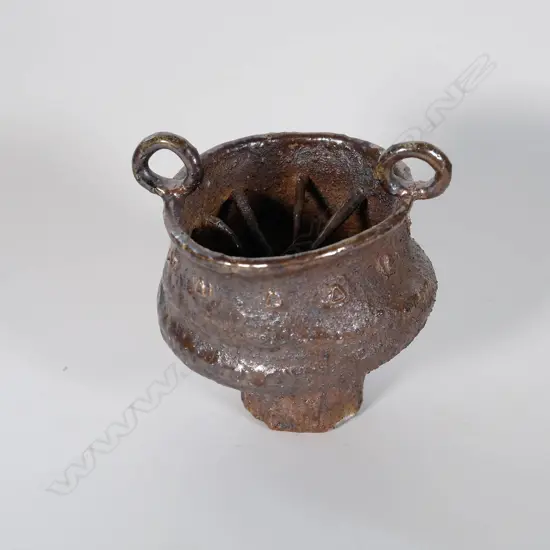
Laurie Steer (b.1977) - Blind Man - Stoneware. 2019
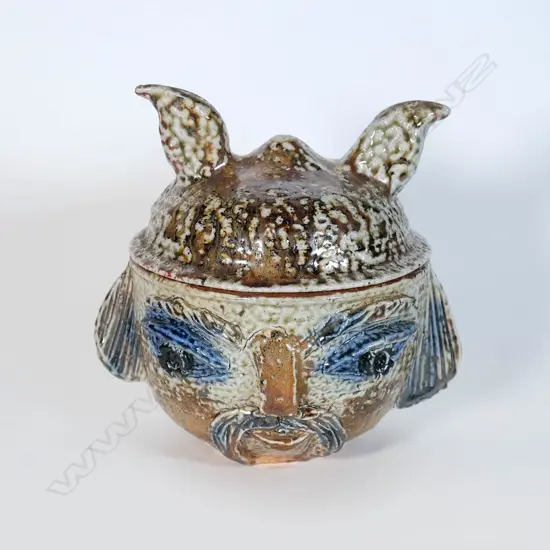
Attr. Juliet Peter - Anthropomorphic salt glaze lidded jar,
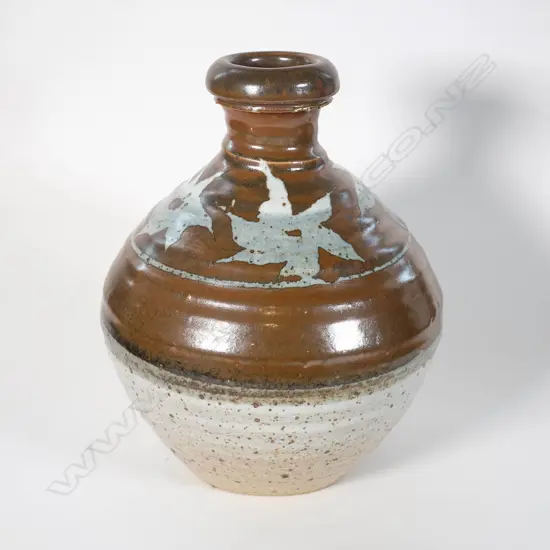
Warren Tippett (1941-1994) - Substantial Ovoid Vase
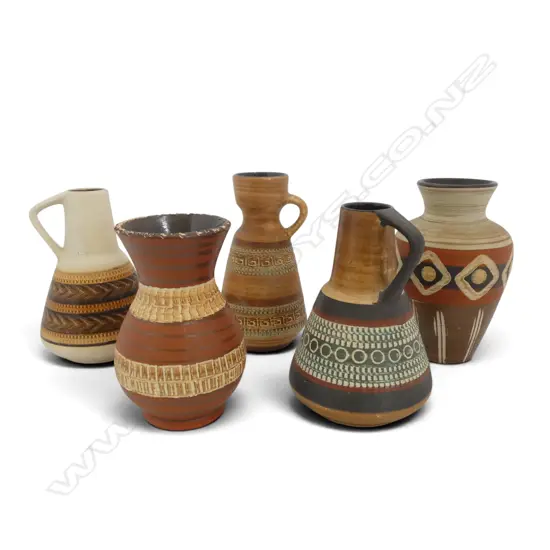
5 RETRO GERMAN POTTERY VASES H.165mm
